Bachelor of Science (Hons) - Creative Computing
- 3 years
- Duration
- 30,890 GBP/year
- Price
- September
- Start
- June
- Deadline
- Bachelor
- Degree
- Campus
- Format
- London / United Kingdom
- Location
Program description
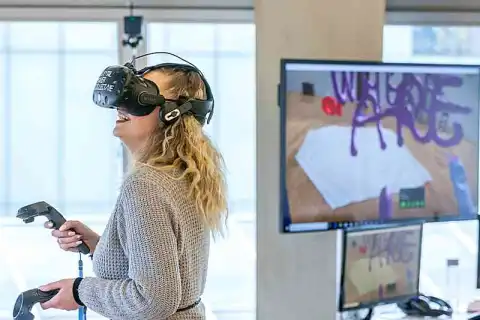
The BSc Creative Computing course is delivered at the UAL Creative Computing Institute and blends technical computing with creative practice within a world-renowned art university. Students learn to code, build apps, craft digital experiences, and explore machine intelligence, acquiring applied skills in dominant coding languages and industry workflows.
This technical foundation is integrated with creative practice to develop innovation, self-reflection, and a critical understanding of technology's cultural impact. The curriculum enables students to explore the agency of computational technology and their own role in shaping the digital world. This unique integration prepares graduates for successful careers in creative practice, the creative industries, or the broader digital technology sector.
Program structure
Year 0
This optional year introduces you to a foundational understanding of creative computing including creative practice and digital production.
- Foundational Methods for Creative Computing One
- Introduction to Creative Computing
- Introducing Creative Practice
- Foundational Methods for Creative Computing Two
- Computational Practices: Digital Production
- Introducing Computational Practice
Year 1
You will begin to broaden your computational skill set with an underpinning in coding – covering an introduction and building to include Data, Maths and Methods. Skills will be applied to creative making and computational practices encompassing sound and image processing as well as experience and physical computing.
- Coding One: Introduction to Creative Computing and Coding Practice
- Critical Studies: A History of Computing and Computational Creativity
- Creative Making: Design and Coding Visuals
- Coding Two: Data and Algorithms
- Computational Practices: Sound and Image Processing
- Creative Making: Physical Computing
Year 2
As you develop your computational understanding you’ll progress into digital making involving both Experimental Human Computer Interaction and Big Data.
- Coding Three: Web Development Studio
- Critical Studies: Network Thinking
- Creative Making: Experimental Human Computer Interaction
- Coding Four: App Development Studio
- Computational Practices: Visualisation and Sensing
- Creative Making: Art and Artificial Intelligence
Year 3 (Optional Year in Industry)
The Diploma in Professional Studies is an optional placement year in industry between the second and third year of the course. It is a managed year of professional experience, largely undertaken in the design profession in a variety of national and international locations.
Successful candidates are selected on a competitive basis from academic performance and studentship, successful completion of the DPS bridging studies and by portfolio and proposal.
Year 3/4
In your final year you will explore computational approaches to machine intelligence and the ethical implications of such technologies. Alongside this you will develop creative project work using machine intelligence frameworks and have the opportunity to develop a self directed graduation project that brings together the skills and expertise you have gained throughout the course.
- Coding Five: Approaches to Machine Intelligence
- Critical Studies: Computational Ethics
- Creative Making: Research and Design for the Graduation Project
- Computational Practices: Creative and Digital Industries
- Creative Making: Graduation Project
Price
Tuition fee:
- 30,890 GBP per year*
*Tuition fees for international students may increase by up to 5% in each future year of your course.
During your studies, you may need to cover extra costs which are not included in your tuition fees. You might need to budget for materials and equipment specific to your course. You may also need a laptop or other digital tech/software.
Requirements for applicants
The standard entry requirements for this course are as follows:
For Year 1 entry:
- Grades BCC or above at A-level
- Merit Merit Merit (MMM) at BTEC Extended Diploma (preferred subjects include Computer Science and ICT, or Design and Technology, or Art and Design)
- Access to Higher Education Diploma with 104 UCAS tariff points (preferred subjects include Computer Science and ICT, or Design and Technology, or Art and Design)
- Pass at Foundation Diploma in Art and Design (Level 3 or 4) and 1 A Level at Grade C or above
- Equivalent EU/International qualifications, such as International Baccalaureate Diploma.
For Year 0 entry:
- Grades CC or above at A-level
- Merit Pass Pass (MPP) at BTEC Extended Diploma (preferred subjects include Computer Science and ICT, or Design and Technology, or Art and Design)
- Access to Higher Education Diploma with 64 UCAS tariff points (preferred subjects include Computer Science and ICT, or Design and Technology, or Art and Design)
- Equivalent EU/International qualifications, such as International Baccalaureate Diploma.
- And three GCSE passes at grade 4 or above (grade A-C).
Additional requirements
If students do not have a Science or Mathematics-based A-level, they should normally have at least Grade B/Grade 6 at GCSE Mathematics.
Entry to this course will also be determined by assessment of your personal statement.
Exceptionally applicants who do not meet these course entry requirements may still be considered.
The course team will consider each application that demonstrates additional strengths and alternative evidence. This might, for example, be demonstrated by:
- Related academic or work experience
- The quality of the personal statement
- A strong academic or other professional reference
- OR a combination of these factors
Each application will be considered on its own merit but we cannot guarantee an offer in each case.
English language requirements
- If English is not your first language, IELTS 6.0 (or equivalent) is required, with a minimum of 5.5 in reading, writing, listening and speaking.
About the university
The University of the Arts London (UAL) produces and encourages the creativity essential for a better future. Its colleges have been at the forefront of innovative education since 1842, creating work with a lasting impact on people and the planet, driven by curiosity, imagination, and purpose.
London is fundamental to UAL's identity, providing a vital context where the university connects and exchanges ideas with individuals from all walks of life. Globally, its creative network influences education, culture, business, and society.
Through innovative research and creative instruction, UAL's faculty and staff bring fresh perspectives to education. The university enables students to build the careers they desire by working with them at every level - from pre-degree to postgraduate, and from short courses to online learning.
UAL's colleges
Ranked second in the world for art and design, UAL comprises six distinct colleges:
- Camberwell College of Arts
- Central Saint Martins
- Chelsea College of Arts
- London College of Communication
- London College of Fashion
- Wimbledon College of Arts
Together, they form a community of creatives, innovators, trailblazers, and storytellers, united in their mission to reimagine the future.
Courses in the visual arts, animation, screen, communication, fashion, media, and performance are available at the undergraduate and graduate levels.