Master of Architecture
- 2 years
- Duration
- 30,890 GBP/year
- Price
- September
- Start
- June
- Deadline
- Master
- Degree
- Campus
- Format
- London / United Kingdom
- Location
Program description
The MArch: Architecture programme at Central Saint Martins critically questions the architect's role and architecture's relationship with economic, political, and social systems in the face of climate and biodiversity crises. It emphasizes care and ethical awareness as central principles, fostering regenerative design methods that actively restore environments and prioritise social justice.
The course breaks open traditional architectural education by centring student lived experiences and subjectivity, creating inclusive spaces to discuss race, gender, and intersectionality within design. Through collaboration with local stakeholders, other disciplines, and external partners, it empowers both human and non-human agents, preparing graduates to move from complicity to active environmental and social regeneration.
Program structure
- Unit 1: Situated Modes of Engagement
This unit encourages experimentation with multidisciplinary research and design approaches, developing situated methodologies to expand and challenge the conventional role of the architect. It enables you to articulate your individual working methods while situating your practice within the extended field of Spatial Practices, focusing on the entanglement between decolonisation, anti-racism, climate justice, and care, which you will test through critically‑engaged design propositions.
- Unit 2: The Collaborative Unit
This unit, nested within Unit 1, focuses on collaboration by partnering with other UAL postgraduate courses. Through cooperative work with students from diverse disciplines, you will directly experience the value of cross‑disciplinary thinking and problem‑solving central to the course.
- Unit 3: Regenerative Construction
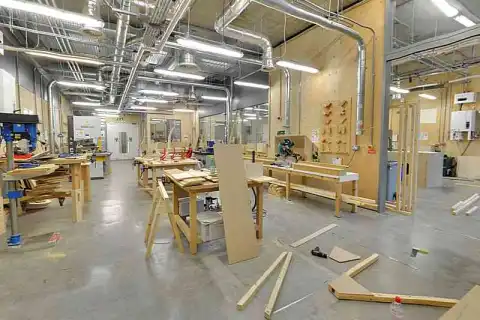
In this unit, you will explore technical making and construction in detail, applying regenerative design principles and methods to achieve zero‑carbon standards. It embeds climate literacy and innovation through a constructional prototyping project that involves research, testing, collaborative teamwork, and implementation, with careful attention to life safety and material systems.
- Unit 4: Professional Spatial Practice (Industry Placement)
In this unit, you will define the direction for your major project through an industry placement that extends your community of practice to external stakeholders. Working with an advisor and a selected organisation, you will gain insights into contemporary spatial practice, assess its ethical implications, and use a contextual study to establish the research agenda and brief for your self‑directed major design project.
- Unit 5: Design for Planetary Care
In this unit, you will develop a self‑led major project culminating in a design proposition centred on planetary care, synthesising your contextual studies thesis and industry placement into a clear brief. The technology component builds on Unit 3, integrating climate innovation through material and technology workshops, while the contextual studies strand concludes with a public, student‑led event where you declare your intent and situate your work within a broader discourse.
- Unit 6: Situated Architectural Practice
Unit 6 is the culmination of the course, involving the refinement and public dissemination of your major design project at the Showcase. It concludes with a speculation on future career pathways, asking you to propose new forms of architectural practice rooted in the professional networks built over the course, while addressing practical barriers like planning, building control, and contracts to prepare you for professional life beyond Central Saint Martins.
- The working week
Central Saint Martins' Spatial Practices programme offers a vibrant art school environment where teaching is designed to foster curiosity and experimentation. You will move fluidly between one‑to‑one tutorials, small group work, cohort‑wide sessions, peer reviews, site work with stakeholders, and hands‑on workshops, with an expected commitment of 30 hours per week.
Price
Tuition fee:
- 30,890 GBP per year*
*Tuition fees may increase in future years for new and continuing students on courses lasting more than one year. For this course, you can pay tuition fees in instalments.
You may need to cover additional costs which are not included in your tuition fees, such as materials and equipment specific to your course.
Requirements for applicants
The standard entry requirements for this course are as follows:
- An upper second class honours degree from an Architects Registration Board (ARB) prescribed course in architecture
- Or an equivalent EU / international qualification
- Or a professional qualification recognised as equivalent to an honours degree
And normally at least one year of relevant internship or, professional experience.
Exceptionally, applicants who do not meet these course entry requirements may still be considered.
The course team will consider each application that demonstrates additional strengths and alternative evidence. This might, for example. be demonstrated by:
- Related academic or work experience
- The quality of the personal statement
- A strong academic or other professional reference
- Or a combination of these factors.
Each application will be considered on its own merit, but we cannot guarantee an offer in each case.
English language requirements
- IELTS score of 6.5 or above, with at least 5.5 in reading, writing, listening and speaking
About the university
The University of the Arts London (UAL) produces and encourages the creativity essential for a better future. Its colleges have been at the forefront of innovative education since 1842, creating work with a lasting impact on people and the planet, driven by curiosity, imagination, and purpose.
London is fundamental to UAL's identity, providing a vital context where the university connects and exchanges ideas with individuals from all walks of life. Globally, its creative network influences education, culture, business, and society.
Through innovative research and creative instruction, UAL's faculty and staff bring fresh perspectives to education. The university enables students to build the careers they desire by working with them at every level - from pre-degree to postgraduate, and from short courses to online learning.
UAL's colleges
Ranked second in the world for art and design, UAL comprises six distinct colleges:
- Camberwell College of Arts
- Central Saint Martins
- Chelsea College of Arts
- London College of Communication
- London College of Fashion
- Wimbledon College of Arts
Together, they form a community of creatives, innovators, trailblazers, and storytellers, united in their mission to reimagine the future.
Courses in the visual arts, animation, screen, communication, fashion, media, and performance are available at the undergraduate and graduate levels.